Getting Around Kawaguchiko Without a Car
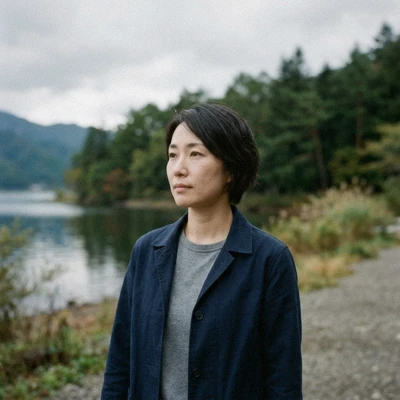
Getting around Kawaguchiko without a car works well for most of the lakes, thanks to three colour-coded sightseeing bus lines that start right outside the station, though the outer lakes and the 5th Station take real planning around limited schedules. Below is what each bus line actually reaches, which of the area passes is worth buying, and the honest limits of a car-free day, for anyone weighing that against a guided Fuji Five Lakes day trip that handles the routing for you.
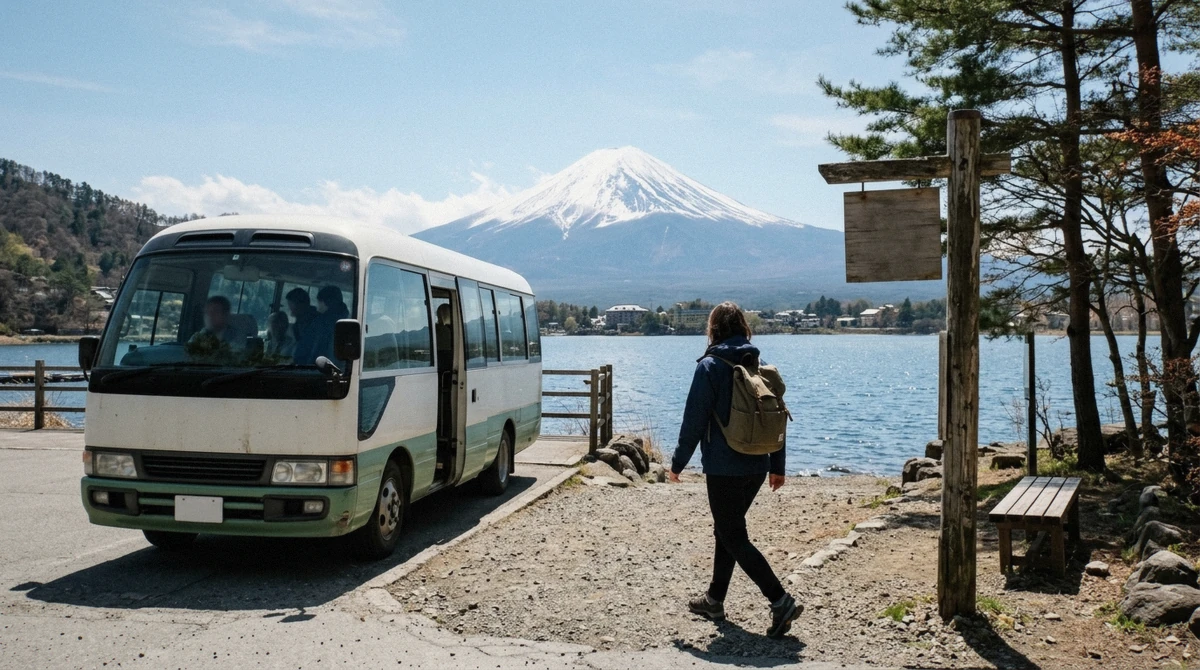
Quick answer
Three colour-coded Fujikyu sightseeing bus lines run from Kawaguchiko Station and reach nearly everything most visitors come for, with the Red Line every 15 minutes covering the busiest shore. A 1-day area pass runs ¥1,500 (about $9, the August 2026 rate) and pays for itself in roughly three or four rides.
Key takeaways
- The Red Line runs every 15 minutes along Lake Kawaguchi's eastern and northern shore, the most frequent of the three
- The Green Line reaches Lake Saiko every 30 minutes, while the Blue Line out to Lakes Shoji and Motosu runs only every 1 to 2 hours
- A 1-day Kawaguchiko/Saiko/Motosuko pass costs ¥1,500 (about $9) and covers all three lines, worth it past two rides
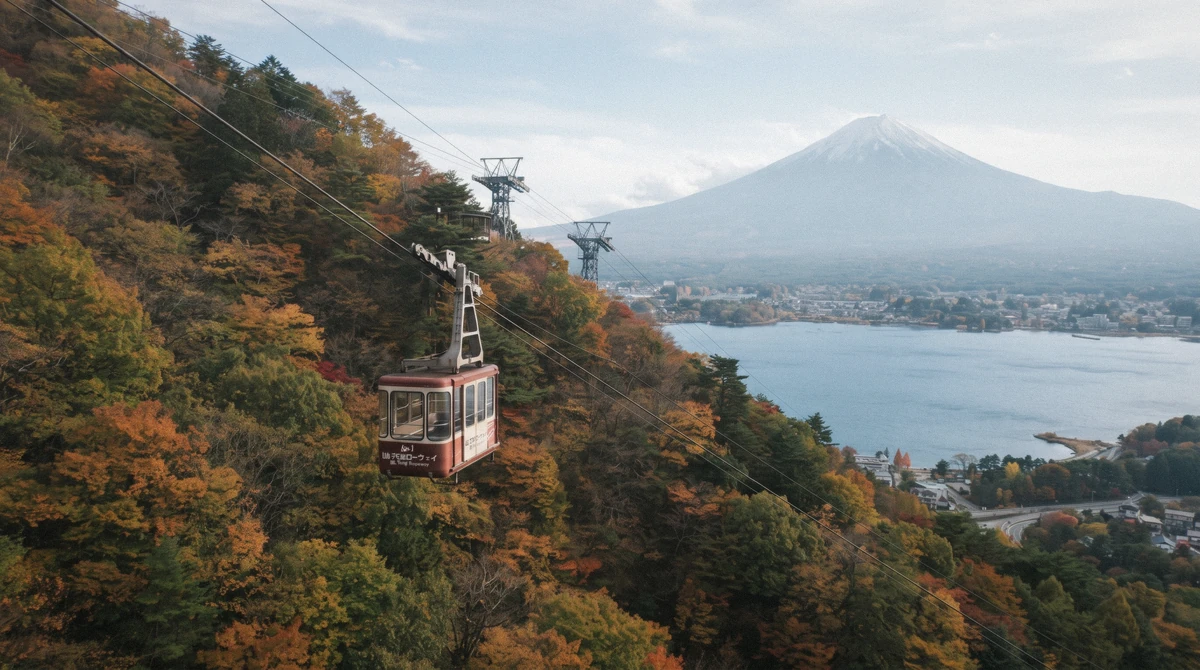
- The Mt. Fuji Panoramic Ropeway costs ¥1,000 (about $6) round trip and takes just 3 minutes each way
- The 5th Station route bus only runs 1 July to 30 November 2026, and outside that window the culture tour at Chureito Pagoda and Arakurayama or a taxi are the only real options
- A guided day trip like the Fuji 5th Station & Kawaguchi Ropeway Scenic Day Trip bundles the ropeway ticket in already
Skip the Bus Timetables Entirely
Each of these covers ground the Blue Line only reaches every one to two hours, or spots the sightseeing buses don't reach directly at all.
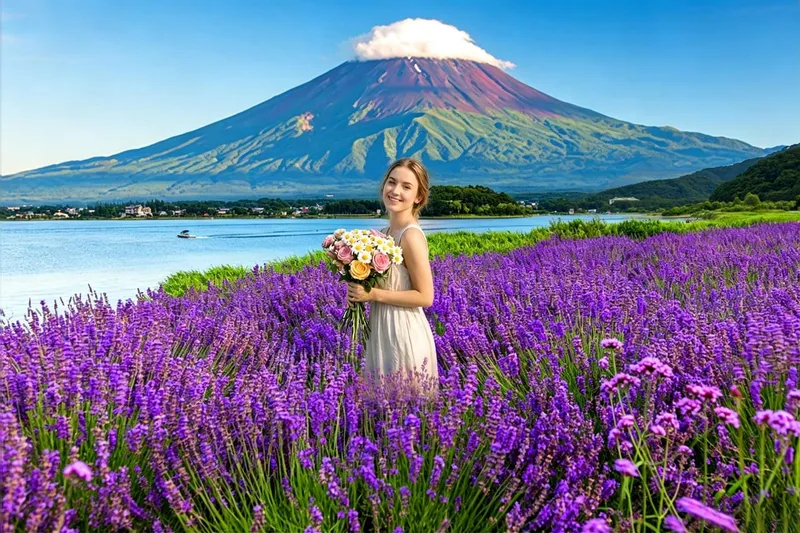 from $49
 Chureito Pagoda, Arakurayama & Oshino Hakkai Culture Tour
A culture-and-scenery day built around the postcard view from Chureito Pagoda at Arakurayama Sengen Park, plus the spring village of Oshino Hakkai. Local context at each stop explains…
- Chureito Pagoda
- Arakurayama Sengen Park
- Oshino Hakkai village
 from $50
 Fuji 5th Station & Kawaguchi Ropeway Scenic Day Trip
Reaches Mount Fuji's 5th Station and rides the Kachi Kachi ropeway above Lake Kawaguchi for a panorama over the lake and peak. Oshino Hakkai's spring ponds round out…
- Fuji 5th Station
- Kachi Kachi ropeway
- Lake Kawaguchi panorama
 from $46
 Small-Group Fuji Shrine & Lava Tour with Steak Lunch
A small-group day around the sacred Hongu Fuji Sengen Shrine, ancient lava-rock formations, and top Fuji viewpoints, with a wagyu steak lunch included. The compact group size means…
- Small-group format
- Fuji Sengen Shrine
- Wagyu steak lunch
The Three Colour Lines from Kawaguchiko Station
All three Fujikyu sightseeing bus lines start from the terminal directly outside Kawaguchiko Station.
Where each line goes and how often
The Red Line covers the eastern and northern shore of Lake Kawaguchi, where most of the station-adjacent sights sit, and runs every 15 minutes. The Green Line covers the southern shore of Lake Kawaguchi and loops around Lake Saiko, running every 30 minutes. The Blue Line is the one that reaches the far side of the region, out through Narusawa to Lakes Shoji and Motosu, but only every 1 to 2 hours.
Last verified: August 2026.
| Line | Covers | Frequency |
|---|---|---|
| Red Line | Lake Kawaguchi, eastern and northern shore | Every 15 minutes |
| Green Line | Lake Kawaguchi southern shore and Lake Saiko | Every 30 minutes |
| Blue Line | Narusawa, Lake Shoji, Lake Motosu | Every 1 to 2 hours |
What this means in practice
Kawaguchiko itself, the most developed and most visited of the five lakes, has the best bus service by a wide margin, since it is served directly by both the Red and Green lines. Shojiko and Motosuko, the smallest and the most remote of the five, sit on the Blue Line's much sparser schedule, so a day trip out that way needs to be built around the bus times rather than fit in whenever convenient. Yamanakako, the largest of the five, is not on any of the three colour lines at all; it belongs to the separate Fujiyoshida / Oshino / Yamanakako zone covered by its own pass below, a distinction that trips up travelers who assume one ticket covers every lake.
Buying a single ticket versus the pass
Every ride on the Red, Green or Blue line can also be paid for individually with cash or an IC card as you board, without buying any pass at all. As the facts above already show, two single rides usually cost less than the ¥1,500 day pass, so a short outing with only one stop each way is often cheaper paid ride by ride. The maths only tips toward the pass once a day involves three or four separate boardings, which is the more common pattern for a full sightseeing day rather than a quick errand.
The Passes: Which One, and When It Pays Off
Three different passes cover different combinations of the region, and none of them is automatically the right call.
The main lakes pass
The Kawaguchiko / Saiko / Motosuko area pass covers the Red, Green and Blue lines plus general Fujikyu bus routes inside that zone. It costs ¥1,500 (about $9) adult, ¥750 (about $5) child for one day, or ¥2,000 (about $13) adult, ¥1,000 (about $6) child for two days. It's sold through the Jorudan Mobile Tickets app as well as at ticket counters.
Last verified: August 2026.
| Pass | 1 day | 2 days |
|---|---|---|
| Kawaguchiko / Saiko / Motosuko, adult | ¥1,500 ($9) | ¥2,000 ($13) |
| Kawaguchiko / Saiko / Motosuko, child | ¥750 ($5) | ¥1,000 ($6) |
| Fujiyoshida / Oshino / Yamanakako, per person | ¥1,800 ($11) | ¥2,200 ($14) |
| Fujisan Fujigoko Passport, bus-only | n/a | ¥3,300 ($21) |
| Fujisan Fujigoko Passport, with rail | n/a | ¥4,700 ($30) |
The other zone, and the bigger passport
A separate pass covers Fujiyoshida, Oshino and Yamanakako, at ¥1,800 (about $11) for one day or ¥2,200 (about $14) for two days. That's the one to buy if the day is built around Oshino Hakkai and Lake Yamanaka rather than Kawaguchiko itself, since it doesn't overlap with the lakes pass above. For a longer stay covering more ground, the Fujisan Fujigoko Passport gives two days of unlimited Fujikyu bus travel for ¥3,300 (about $21) bus-only, or ¥4,700 (about $30) for the version that adds rail coverage.
Last verified: August 2026.
The Mt. Fuji Panoramic Ropeway
The ropeway up Mt. Tenjo, also called Kachikachi-yama, is one of the easiest car-free wins at the lakes.
Fares, hours and the ride itself
A round trip costs ¥1,000 (about $6) adult, ¥500 (about $3) child; one way is ¥600 (about $4) adult, ¥300 (about $2) child. The ride itself takes 3 minutes and climbs to Fujimidai Station at 1,075 metres, where the deck gives a 360-degree view over Lake Kawaguchi to Mount Fuji, and on the clearest days out to the Southern Alps. Standard hours run 08:30 to 17:00, with the last descent at 17:20; between 20 July and 31 August the schedule extends to 08:30 to 18:00, last descent 18:20.
Operations pause in lightning, high wind and hail, so build in a backup plan on a rough-weather day. Last verified: August 2026.
| Ticket | Price |
|---|---|
| Round trip, adult | ¥1,000 ($6) |
| Round trip, child | ¥500 ($3) |
| One way, adult | ¥600 ($4) |
| One way, child | ¥300 ($2) |
Reaching the Far Lakes and the 5th Station
Shojiko, Motosuko and the Subaru Line 5th Station all take more planning than Kawaguchiko itself.
The Blue Line to Shojiko and Motosuko
The Blue Line is the only sightseeing bus that reaches Lake Shoji and Lake Motosu, and it runs just every 1 to 2 hours, well below the Red and Green line frequency. A day trip out to the far lakes needs to work around that timetable rather than assume a bus will show up shortly after you arrive at a stop.
Getting to the 5th Station without a car
A route bus from Kawaguchiko Station or Mt. Fuji Station reaches the Subaru Line 5th Station for ¥3,400 (about $21) adult, ¥1,700 (about $11) child round trip, with the ticket valid for two days. That route bus only operates 1 July to 30 November 2026. A separate shuttle from the Fujisan parking lot runs 4 July to 10 September 2026, at ¥2,000 (about $13) one way or ¥3,400 (about $21) round trip.
Buses are suspended whenever the Subaru Line itself closes, or opens only as far as the 1st Station, and tickets are bought at ticket offices or through the Jorudan app, not on board. Outside the bus season, the 5th Station is realistically reachable only on a tour or by taxi, and in deep winter often not at all. Last verified: August 2026.
What this means for planning around the season
Because the route bus window runs only 1 July through 30 November, anyone visiting outside that stretch needs to decide upfront whether the 5th Station is even part of the plan. There is no workaround at the ticket counter once the season ends, since the buses themselves stop running rather than just getting less frequent. A guided day trip that includes the 5th Station as a stop sidesteps this entirely, since the operator plans the route around whichever access is available that month, taxi included where the route bus does not run.
A Car-Free Day on the Red and Green Lines
A realistic day built entirely on Kawaguchiko's own two frequent bus lines.
-
09:00
Board the Red Line at Kawaguchiko Station
Every 15 minutes, so there's no need to plan around a specific departure time.
-
09:20
Oishi Park and the north shore
Flower beds and open lake views, a short ride from the station.
-
10:30
Ropeway to Mt. Tenjo
A 3-minute climb to the 1,075-metre deck for the widest view over the lake toward Fuji.
-
12:30
Switch to the Green Line toward Saiko
Every 30 minutes, reaching the quieter southern shore and Lake Saiko.
-
16:00
Back to Kawaguchiko Station
The Red Line's 15-minute frequency makes the return leg easy to time around dinner rather than the bus.
Buses and a Pass vs a Guided Day Trip
Buses plus an area pass
- Full control over pacing and how long you stay at each stop
- A day pass covers the Red, Green and Blue lines for ¥1,500 (about $9), cheap once you take more than two rides
- The Blue Line's 1 to 2 hour frequency means the far lakes need real schedule planning
- The 5th Station bus only runs part of the year, and needs an advance ticket bought off the bus
A guided day trip
- Reaches the 5th Station and the far lakes on the tour's own schedule, without checking bus season dates
- Ropeway or other entry tickets are often bundled into the price already
- Covers more ground in one day than the bus lines can realistically string together
- Costs more than a day pass, and runs on a fixed itinerary rather than your own pace
Verdict For a day centred on Kawaguchiko itself, the Red and Green lines plus a day pass are genuinely enough and noticeably cheaper. Once the far lakes, the 5th Station outside bus season, or several stops in one day are the goal, a tour like the Fuji 5th Station & Kawaguchi Ropeway Scenic Day Trip covers ground the bus timetable simply can't match in a single visit.
Getting Around Without a Car: Questions Answered
How do you get around the Fuji Five Lakes without a car?
Mainly the three Fujikyu sightseeing bus lines from Kawaguchiko Station: Red every 15 minutes, Green every 30 minutes, and Blue every 1 to 2 hours for the far lakes. An area pass covers all three.
Is the Kawaguchiko bus pass worth it?
Yes, past about two rides. The 1-day pass costs ¥1,500 (about $9) and the Red Line loop alone repays it in roughly three or four rides, so anyone hopping between more than two stops comes out ahead.
How often do the sightseeing buses run?
The Red Line every 15 minutes, the Green Line every 30 minutes, and the Blue Line to the far lakes only every 1 to 2 hours. Plan the Blue Line legs of a day around that slower schedule.
How do you get to Lake Motosu or Lake Shoji by bus?
The Blue Line, also called the Narusawa / Shojiko / Motosuko Sightseeing Bus, is the only sightseeing line that reaches them, running every 1 to 2 hours from Kawaguchiko Station.
How much is the Mt. Fuji Panoramic Ropeway?
¥1,000 (about $6) round trip or ¥600 (about $4) one way for an adult, half price for a child. The ride takes 3 minutes to Fujimidai Station at 1,075 metres.
Can you reach the 5th Station without a car?
Yes, by route bus from Kawaguchiko Station, but only from 1 July to 30 November 2026, for ¥3,400 (about $21) round trip. Outside that window it's realistically a tour or a taxi.
Kawaguchiko itself is genuinely easy without a car, thanks to the Red and Green lines running every 15 to 30 minutes. The far lakes and the 5th Station are where the car-free plan needs real scheduling, or a tour that has already worked the timetable out. Pick whichever matches how much of the region you actually want to cover in a day, and check the season dates for the 5th Station bus before building a whole itinerary around it.
Getting to the region in the first place is covered in routes and fares from Tokyo; if the bus season or the timetable does not fit your date, the 5th Station and ropeway day trip and the small-group shrine and lakes day cover the same ground with the driving done for you, and the Chureito Pagoda guide explains the walk up from Shimo-Yoshida.