The Best Time to Visit Kawaguchiko
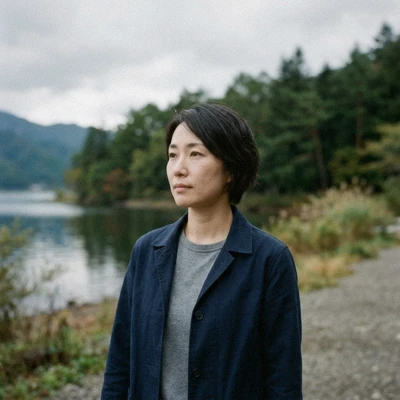
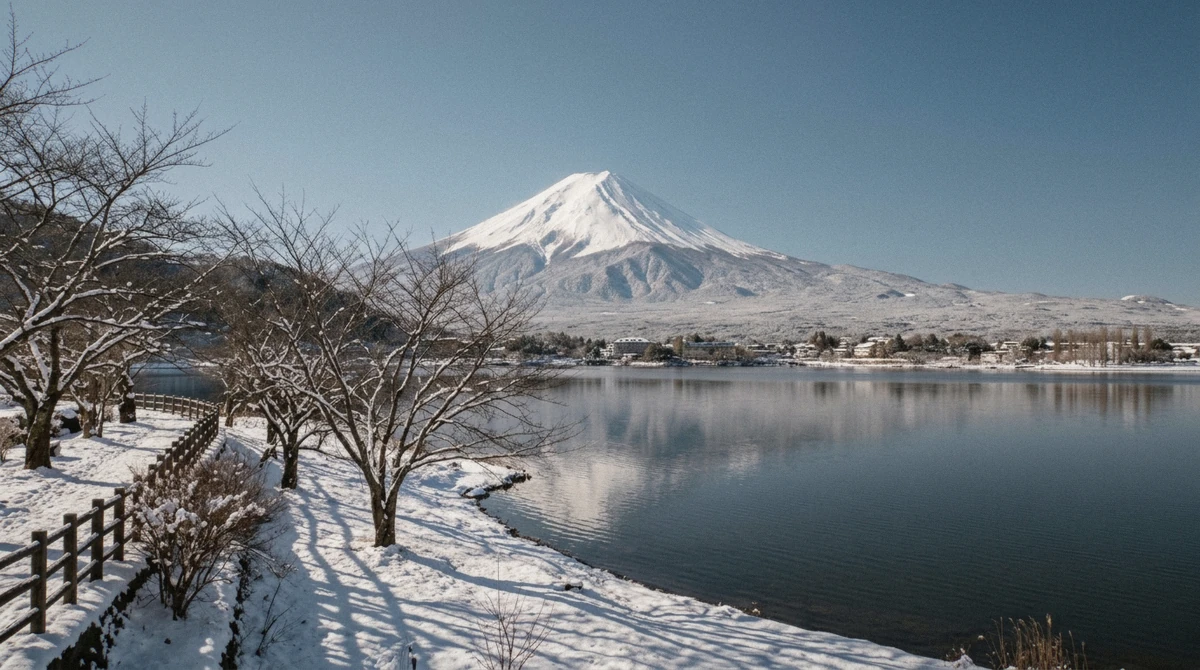
The best time to visit Kawaguchiko for a clear view of Mount Fuji runs from late autumn through early spring, and January in particular, which is the opposite of what most first-time visitors assume. The Japan Meteorological Agency's own record for the Kawaguchiko station backs this up: January logs more sunshine than any other month, while the height of summer is actually the haziest stretch of the year. Whatever pulls you here, whether it is a clear mountain or a specific bloom, guided day trips around the Fuji Five Lakes run through every season, so the choice comes down to what you want to see, not whether a tour exists that month.
Quick answer
January is genuinely the clearest month at the lakes, with more recorded sunshine than any other month of the year, while September is the wettest by a wide margin. Most visitors come in the warmer months anyway, which means winter also delivers thinner crowds on top of the better odds of a clear mountain.
Key takeaways
- January records more sunshine than any other month at the Kawaguchiko weather station, and December is the driest
- September is the wettest month of the year by a distance, and it overlaps typhoon season
- The clear early-morning hours give way to cloud building over the cone as the day warms, a pattern worth planning around, and the main argument in a day trip or an overnight at the lakes
- Cherry blossom at the lakes usually lands in mid-April, later than Tokyo, and is always a forecast rather than a fixed date
- The 2026 autumn leaves festival runs 7 to 29 November with evening illumination, one of the better reasons to visit outside the winter clarity window
- Photography-focused visitors can build a trip around the clearest hours with the Mt. Fuji Top Five Viewpoints Photo Day Tour
Day Trips Built Around the View
These three run year-round and each leans into a different reason to visit: value sightseeing, photography pacing, and the pagoda and shrine circuit.
 from $49
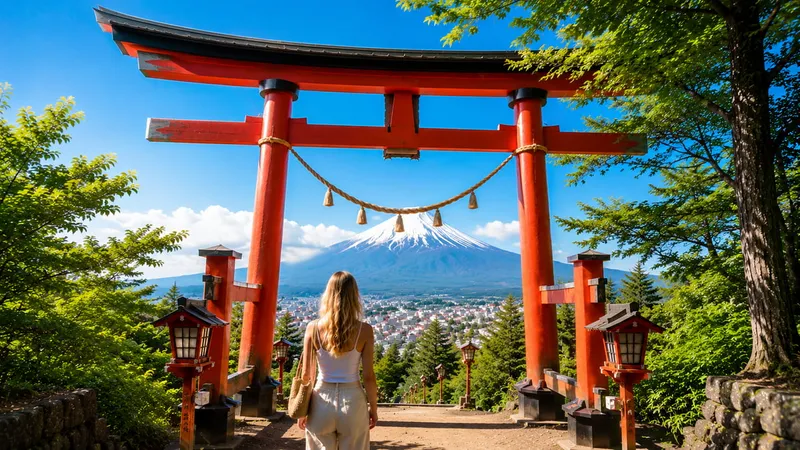
 Mt. Fuji Six-Spot Highlights Day Trip from Tokyo
A full-day loop hitting six classic Fuji Five Lakes viewpoints, from Arakurayama's Chureito Pagoda to the spring-fed ponds of Oshino Hakkai. Round-trip transport from Tokyo keeps the day…
- Chureito Pagoda viewpoint
- Lake Kawaguchi shoreline
- Oshino Hakkai spring ponds
 from $55
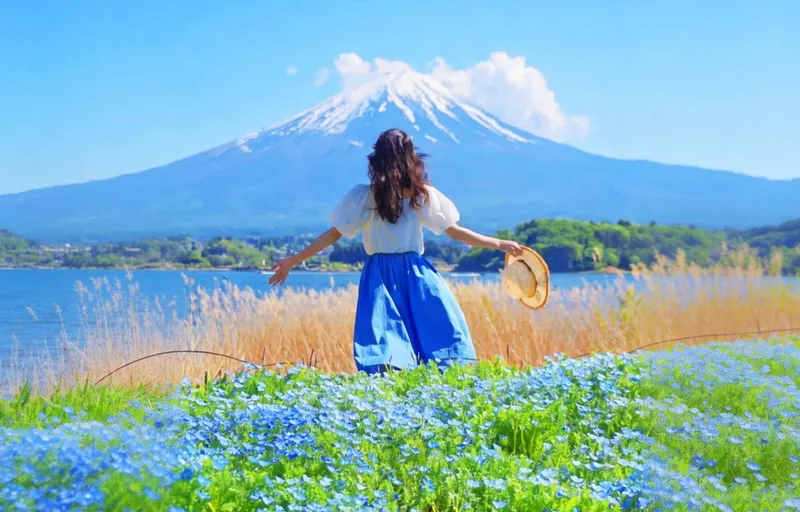
 Mt. Fuji Top Five Viewpoints Photo Day Tour
A photography-minded loop of five signature Fuji viewpoints, including Arakurayama Sengen Park and Oshino Hakkai. Timed stops give you the light and angles that make the mountain the…
- Arakurayama Sengen Park
- Five signature viewpoints
- Oshino Hakkai
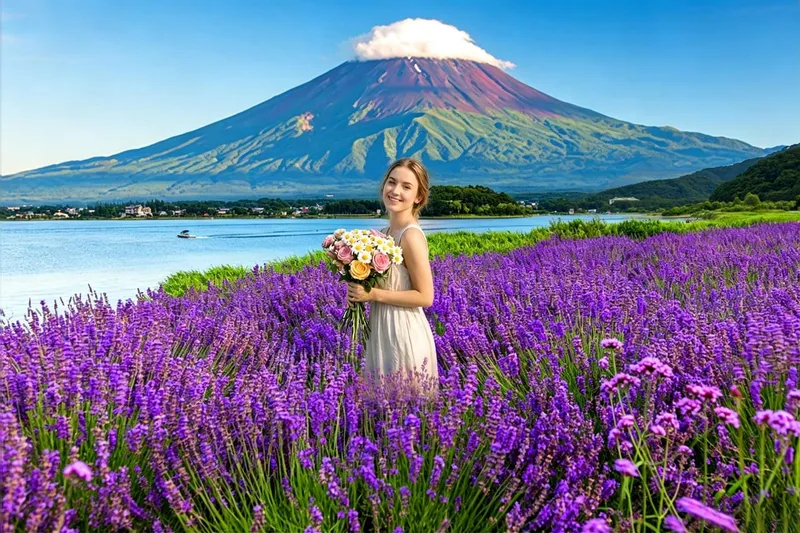 from $49
 Chureito Pagoda, Arakurayama & Oshino Hakkai Culture Tour
A culture-and-scenery day built around the postcard view from Chureito Pagoda at Arakurayama Sengen Park, plus the spring village of Oshino Hakkai. Local context at each stop explains…
- Chureito Pagoda
- Arakurayama Sengen Park
- Oshino Hakkai village
When the Mountain Is Actually Visible
This is the Japan Meteorological Agency's own 1991 to 2020 normal record for the Kawaguchiko station, the closest thing to an honest answer this question has.
Sunshine and rainfall, month by month
No visibility percentages circulate here because none of the widely shared ones trace back to the JMA. What the record does show plainly: January is the sunniest month on file, December the driest, and September the wettest by a wide margin. Last verified: August 2026.
| Month | Mean temp | Precipitation | Sunshine hours |
|---|---|---|---|
| January | -0.4°C (31°F) | 60.9 mm | 212.3 |
| February | 0.6°C (33°F) | 55.4 mm | 190.7 |
| March | 4.2°C (40°F) | 107.6 mm | 185.7 |
| April | 9.5°C (49°F) | 106.1 mm | 185.5 |
| May | 14.3°C (58°F) | 123.2 mm | 181.0 |
| June | 17.8°C (64°F) | 157.1 mm | 122.8 |
| July | 21.9°C (71°F) | 178.4 mm | 148.4 |
| August | 22.5°C (73°F) | 176.8 mm | 165.2 |
| September | 18.7°C (66°F) | 264.7 mm | 122.5 |
| October | 13.0°C (55°F) | 230.0 mm | 134.4 |
| November | 7.5°C (46°F) | 76.0 mm | 165.8 |
| December | 2.3°C (36°F) | 49.8 mm | 199.9 |
Reading the table honestly
September pairs the year's heaviest rain, 264.7 mm, with sunshine down at 122.5 hours, roughly tied with June for the least of any month, and typhoon season overlaps it directly. June's own sunshine collapses to 122.8 hours during the rainy season. Against that, January delivers 212.3 hours of sunshine, the most of the year, and December has the lightest rain at 49.8 mm.
The source is the Japan Meteorological Agency's 1991 to 2020 normals for the Kawaguchiko station, not a travel blog average.
Time of Day Matters More Than the Season
Even in a clear month, when you look matters almost as much as which month you picked.
Mornings are the reliable window
The honest, widely observed pattern at the lakes is that Mount Fuji shows up most reliably in the first hours after sunrise, and cloud tends to build over the cone from mid-morning onward as the surrounding slopes warm through the day. This is a pattern to plan around, not a guaranteed probability, and it holds in every season, though it matters most in the warmer months when afternoon cloud is at its thickest. A photography-paced day trip like the Mt. Fuji Top Five Viewpoints Photo Day Tour is built around exactly this window.
Season by Season
Each season at the lakes trades something for something else. None of them is simply better across the board.
Winter (December to February): the clearest air, the coldest days
This is the window the JMA record actually favors: January's 212.3 sunshine hours are the year's high point, and December's 49.8 mm of rain is the year's low. The trade-off is real cold, with January averaging -0.4°C (31°F), well below freezing, and the lakes running noticeably colder than central Tokyo at the same hour. Crowds thin out here too, since most visitors still default to the warmer months.
Spring (March to May): warming up, cherry blossom
Temperatures climb from a cool 4.2°C (40°F) in March to a comfortable 14.3°C (58°F) by May, and this is when cherry blossom typically arrives at the lakes, usually around mid-April and later than Tokyo's own bloom because the park sits near 1,000 metres. Sunshine hours stay respectable through the season, though rainfall picks up steadily each month.
Summer (June to August): the haziest stretch, the warmest days
August is the warmest month on record at 22.5°C (73°F), but June's sunshine collapses to 122.8 hours in the rainy season, and both July and August carry the year's heaviest rainfall alongside the heat. This is the busiest season for visitors generally, and also statistically the least likely window to see a genuinely clear mountain, even though the lake activities themselves are at their best.
Autumn (September to November): a wet start, a clear finish
September opens the season as the wettest month of the entire year at 264.7 mm, with typhoon season still a real factor. By November, conditions have turned around sharply: 165.8 sunshine hours and just 76.0 mm of rain, alongside the autumn leaf colour that draws its own visitors independent of the mountain view.
If Your Priority Is...
If clear skies and thin crowds matter most
go in January, the year's sunniest month on the JMA record, and dress for genuine winter cold
If cherry blossom is the whole point of the trip
aim for mid-April, and check a bloom forecast close to your dates since it moves by about a week either way
If warm-weather sightseeing matters more than a guaranteed clear peak
go in August, and accept that summer haze is the trade-off for the warmest, greenest days at the lakes
If the autumn leaves are the draw
aim for 10 to 20 November, the usual peak of the Momiji Kairo colour, and catch the evening illumination
If the Shibazakura flower fields are the goal
plan around the festival window, which ran mid-April to late May in 2026, and confirm next year's dates with the organiser before you book
The Set-Piece Seasons
Three events give the lakes a second reason to visit beyond the mountain itself, each tied to a real window rather than a loose season.
Cherry blossom
Blossom at the lakes typically peaks around mid-April, later than central Tokyo because the elevation here sits near 1,000 metres. Treat this as a forecast, not a schedule; it shifts by roughly a week in either direction depending on the year's weather.
Fuji Shibazakura Festival 2026
The 2026 festival ran at Fuji Motosuko Resort, 212 Motosu, Fujikawaguchiko, roughly from mid-April to late May, daily 08:00 to 16:00, with around 500,000 moss phlox plants in bloom. Admission in 2026 ran from ¥900 (about $6) adult and ¥400 (about $3) child in advance, or from ¥1,000 (about $6) adult and ¥500 (about $3) child same-day; gate admission was ¥1,000 (about $6) on standard dates and rose to ¥1,300 (about $8) in the peak window around late April to early May. Because exact dates shift with the bloom each year, check the organiser's own site before planning a trip specifically around it.
Last verified: August 2026.
| Ticket type | Price |
|---|---|
| Advance, adult | ¥900 ($6) |
| Advance, child | ¥400 ($3) |
| Same-day, adult | ¥1,000 ($6) |
| Same-day, child | ¥500 ($3) |
| Gate, standard dates | ¥1,000 ($6) |
| Gate, peak window | ¥1,300 ($8) |
Fujikawaguchiko Autumn Leaves Festival
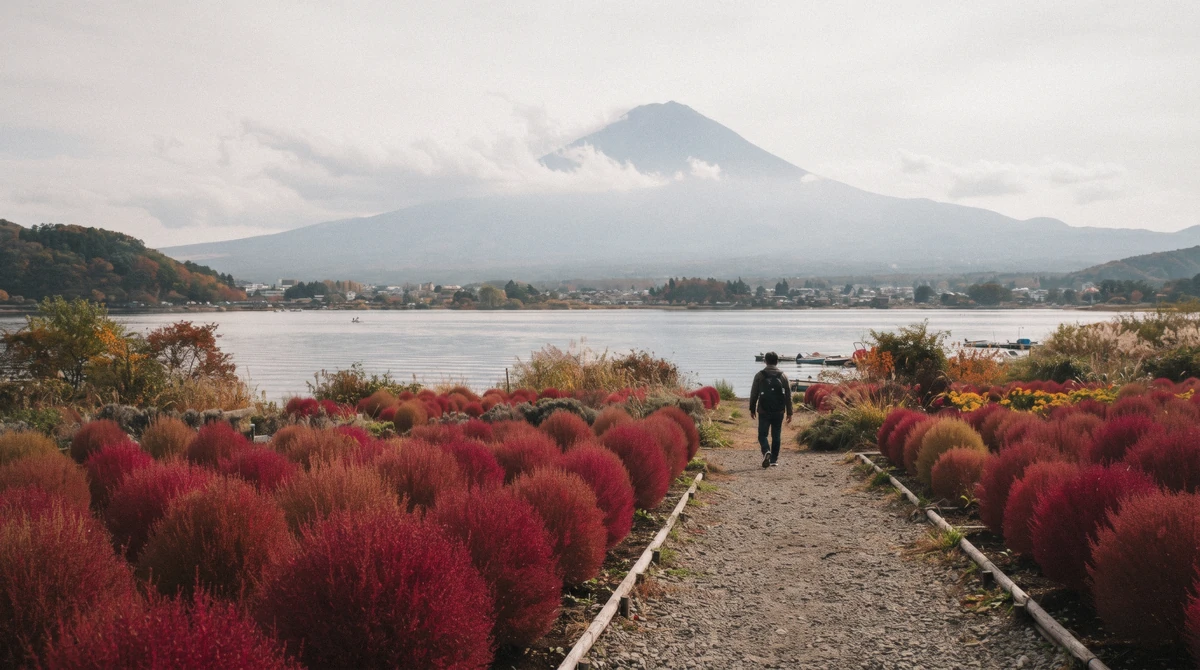
The 2026 Momiji Kairo runs 7 to 29 November along the north shore of Lake Kawaguchi beside the Nashi River, where around 60 large maples line the walk. Evening illumination runs from sunset to 21:00, and peak colour usually lands between 10 and 20 November, a pattern rather than a promise. The nearest stop is Kubota Ichiku Art Museum on the Red Line sightseeing bus.
Last verified: August 2026.
What to Wear and What a Day Actually Feels Like
The lakes sit at elevation near Mount Fuji's northern base, so pack for the record above, not for a Tokyo forecast.
Winter through spring
January mornings average -0.4°C (31°F), genuinely below freezing, and even by April the mean is only 9.5°C (49°F). A proper coat, gloves and a hat are not optional in December through February; layers that come off easily matter more in March and April as the day warms.
Summer
August is the warmest month at 22.5°C (73°F), and the lakes run roughly 5 to 7°C cooler than central Tokyo at the same hour, so a light layer for the evening is worth packing even in peak summer. Rain gear matters more here than sun protection given July and August's rainfall totals.
Autumn
November averages a mild 7.5°C (46°F) with the year's second-lowest rainfall, making it one of the more comfortable months to be outdoors for a full day, alongside the autumn colour itself.
One packing habit that matters year-round
Whatever the season, mornings at the lakes run consistently colder than the daytime high suggests, since the sun has not yet warmed the air over the water. A layer that can come off by mid-morning and go back on once the sun drops covers the swing in every month on the table above, and it matters even in August, when the evening cool comes back faster than most summer visitors expect.
Best Time to Visit Kawaguchiko: Questions Answered
When is Mount Fuji most likely to be visible?
The clearest air runs from late autumn through early spring, with January the sunniest month on the JMA record. Within any day, the first hours after sunrise are the most reliable window before cloud tends to build over the cone.
What is the best month to visit Kawaguchiko?
January, if a clear view of the mountain and thin crowds matter most. If a specific bloom or the autumn colour is the goal, mid-April or 10 to 20 November respectively fit better.
What time of day is Mount Fuji clearest?
The first hours after sunrise. Cloud tends to build over the cone as the surrounding slopes warm through mid-morning and into the afternoon.
When is the cherry blossom at Kawaguchiko?
Usually around mid-April, later than Tokyo because of the elevation here. Treat it as a forecast that can shift about a week either way, never a fixed date.
When are the autumn leaves at Lake Kawaguchi?
The 2026 Fujikawaguchiko Autumn Leaves Festival runs 7 to 29 November, with peak colour usually landing between 10 and 20 November and evening illumination until 21:00.
What is the weather like at Kawaguchiko in winter?
Cold and clear. January averages -0.4°C (31°F) with the year's highest sunshine total, 212.3 hours, and December is the driest month at 49.8 mm of rain.
There is no single correct month here, only a trade-off worth making on purpose. Winter buys the clearest mountain and the thinnest crowds at the cost of real cold. Spring and autumn each buy a specific bloom or colour window on a forecast, not a guarantee.
Summer buys warmth and green scenery at the cost of the year's haziest air. Pick the trade that matches what you actually came here to see. Season shapes the itinerary too: the photography day built around five viewpoints times its stops to the light, the Chureito and Arakurayama culture day suits blossom and autumn colour, and a day trip or an overnight changes what the early morning is worth to you.
- Pack a warm layer in every season, since the lakes run several degrees cooler than Tokyo
- Plan the mountain view for the morning and the indoor stops for the afternoon
- Check the festival organiser's own dates before building a trip around blossom or moss phlox
- Bring waterproofs from June to October, the two wettest stretches of the year
- Keep one flexible day in the itinerary if a clear view matters to you