Chureito Pagoda Guide: Steps, Hours and Getting There
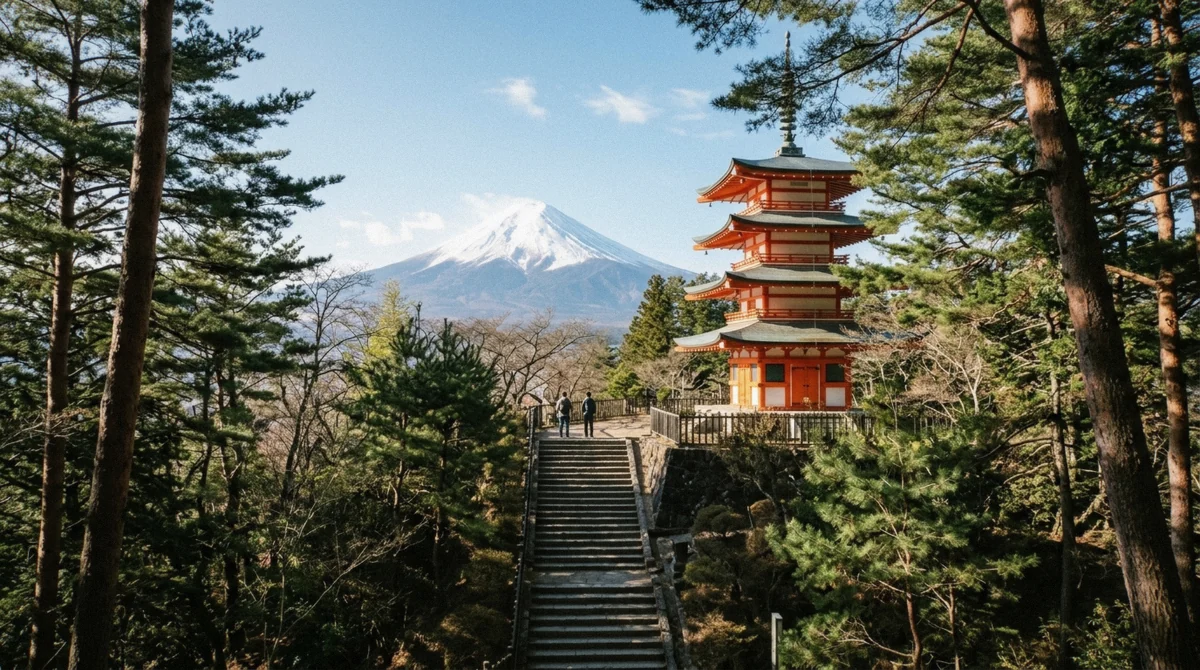
A proper chureito pagoda guide has to start with what the building is, not with the photograph everyone has seen. The five-storey pagoda sits above Fujiyoshida city in Arakurayama Sengen Park, and it is a war memorial before it is anything else. Admission is free, the park never closes for the season, and the price of the view is 398 steps from the entrance. If you want the wider context of a day around the lakes, Mount Fuji day trips from Tokyo lay out every option from this park to the ropeway.
Quick answer
There are 398 steps from the park entrance to the observation deck, admission is free, and Arakurayama Sengen Park is open 24 hours with no seasonal closure. The nearest station is Shimo-Yoshida on the Fujikyuko Line, about a 20-minute walk from the base of the stairs.
Key takeaways
- The pagoda is a war memorial holding 1,055 names, not primarily a photo backdrop
- 398 steps with a sloped path alongside part of the climb; budget 15 to 20 minutes going up at an easy pace
- Shimo-Yoshida Station on the Fujikyuko Line is the closest stop; getting to Kawaguchiko from Tokyo covers the fares for that leg
- Chureito Pagoda, Arakurayama & Oshino Hakkai Culture Tour builds a whole day around this stop plus the ropeway and Oishi Park
- Cherry blossom usually peaks around mid-April, later than Tokyo, and the forecast can move a week either way
- 87 free parking spaces exist for regular cars, with a charge added during the cherry blossom period
Tours That Include the Pagoda
Several of the day trips on this site build a stop here into a wider loop around the lakes, so the climb doesn't have to stand alone against the return journey to Tokyo.
 from $49
 Chureito Pagoda, Arakurayama & Oshino Hakkai Culture Tour
A culture-and-scenery day built around the postcard view from Chureito Pagoda at Arakurayama Sengen Park, plus the spring village of Oshino Hakkai. Local context at each stop explains…
- Chureito Pagoda
- Arakurayama Sengen Park
- Oshino Hakkai village
 from $49
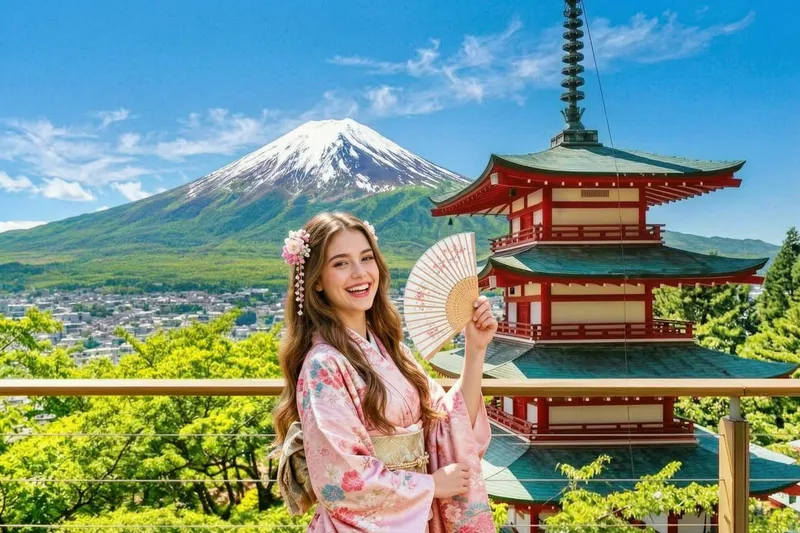
 Lake Kawaguchi, Oishi Park & Chureito Pagoda Tour
Frames Mount Fuji across Lake Kawaguchi from the flower beds of Oishi Park and the five-storey Chureito Pagoda. The route pairs the region's two most photographed vantage points…
- Oishi Park flower views
- Chureito Pagoda
- Oshino Hakkai ponds
 from $55
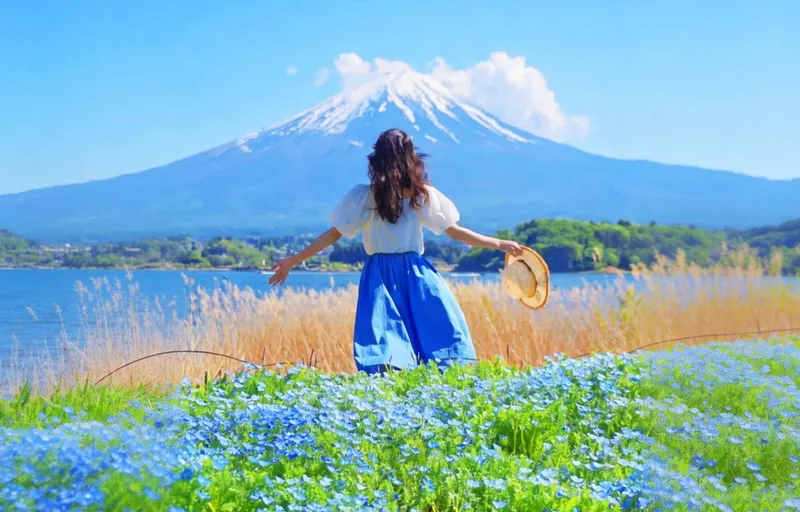
 Mt. Fuji Top Five Viewpoints Photo Day Tour
A photography-minded loop of five signature Fuji viewpoints, including Arakurayama Sengen Park and Oshino Hakkai. Timed stops give you the light and angles that make the mountain the…
- Arakurayama Sengen Park
- Five signature viewpoints
- Oshino Hakkai
What the Pagoda Actually Is
Before the stairs, the steps, or the shot: what this building was built for.
A war memorial, not a stage set
The Chureito Pagoda is the Fujiyoshida cenotaph for local residents who died in wars dating back to 1868. It holds 1,055 names. A construction committee formed on 12 August 1958 to build it, and the pagoda was completed in the early 1960s. That history sits underneath every photograph taken from the deck, and it is worth pausing on before treating the site as a backdrop. Visitors are welcome, the park is open around the clock, and the setting is genuinely beautiful, but the building itself commemorates loss, and it deserves the same quiet respect you would bring to a memorial anywhere else.
The pagoda's five-storey form follows a traditional Japanese silhouette, and it stands apart from the town below on a wooded rise, which is part of why the committee chose this spot in the first place: a quiet setting above the community it honours, with the mountain behind it. None of that history shows up in a quick glance at the building, which is exactly why it's worth a sentence or two before the camera comes out. A name plaque and information near the pagoda itself explain the memorial in more depth than a single stop can cover, and reading it, even briefly, changes how the climb up feels on the way down.
The 398 Steps
The climb is the one part of a visit here that catches first-timers off guard, so it's worth sizing up honestly.
How the stairway is laid out
From the park entrance to the observation deck near the pagoda, there are 398 steps in total. A sloped path runs alongside part of the stairway, which helps for a stretch, but it turns back into steps again near the top, so there's no way to avoid climbing altogether. The grade is steady rather than steep in any single section, and most visitors in reasonable shape manage it without stopping, though a slower pace with a couple of breathers is completely normal, especially in summer humidity.
- Plan 15 to 20 minutes for the climb at an easy pace, longer with young kids or if you're stopping often for photos
- Wear real shoes; the steps are uneven stone in places and flip-flops make the descent awkward
- Handrails run along most of the stairway
- The sloped section helps but does not replace the stairs entirely
Who will find it hard
Anyone using a wheelchair or with significant mobility limitations should know upfront that there is no step-free route to the deck; the sloped path still ends in stairs. Strollers are workable if someone can carry or fold them for the final stretch. For most visitors, including families with kids old enough to walk on their own, the climb is a manageable ten to twenty minutes rather than a genuine hike.
Older travelers and anyone recovering from an injury should still budget extra time rather than rule the climb out; the steady grade and the handrails make it more forgiving than a mountain trail, and there's no shame in stopping halfway to catch your breath and take in the view early. Because the park never closes and there's no ticket or timed entry, nobody is rushing you up or down, which is one advantage this site has over almost every other lookout in the region.
Getting There from Tokyo and from Kawaguchiko
The pagoda stands in Fujiyoshida, not Fujikawaguchiko, which is the single most common mix-up in trip planning here. Confusing the two towns sends people to the wrong side of the lake.
By train and on foot
The nearest station is Shimo-Yoshida on the Fujikyuko Line, one stop before Fujikyu-Highland Station and two before Kawaguchiko Station on trains coming from Tokyo. From Shimo-Yoshida it's about a 20-minute walk to the foot of the stairs, mostly flat streets through the town before the climb starts. If you're already at Kawaguchiko Station, backtracking one stop on the Fujikyuko Line is the simplest approach; a taxi covers the same distance in a few minutes for those who'd rather skip the walk.
| Leg | Fare | Notes |
|---|---|---|
| Otsuki → Shimo-Yoshida (Fujikyuko Line) | ¥980 (about $6) | Part of the route in from Tokyo via Otsuki; Last verified: August 2026 |
| Shimo-Yoshida → Kawaguchiko (Fujikyuko Line) | ¥230 (about $1.45) | One stop, a few minutes; Last verified: August 2026 |
| Shimo-Yoshida Station to the base of the stairs | Free | About a 20-minute walk |
For anyone starting from Tokyo
The wider question of how to get to this region from Shinjuku or Tokyo Station, by train or by expressway bus, is answered in full in getting to Kawaguchiko from Tokyo rather than repeated here. A guided day trip solves the whole routing question at once, since the coach handles both the journey out and the return, and several of the itineraries on this site put this stop early in the day when the light and the crowds are both at their best.
Independent travelers piecing the trip together on public transport should note that Shimo-Yoshida is a small local stop, not a terminus with a taxi rank waiting outside; the platform is short and the surrounding streets are residential, so it helps to know the walking direction to the park before you step off the train rather than working it out on the spot. A phone map or a downloaded route saves the ten minutes that would otherwise go to backtracking through the same few blocks.
Hours, Admission and Parking
The practical numbers, in one place.
What it costs and when it's open
Admission to Arakurayama Sengen Park is free, and the park is open 24 hours with no seasonal closure. There is no ticket booth and no gate to pass through. Because the site never closes, it's one of the few sights at the lakes you can visit at dawn, which matters for the light discussion below.
| Detail | Figure |
|---|---|
| Admission | Free |
| Park hours | 24 hours, every day, no seasonal closure |
| Parking | 87 free spaces for regular cars |
| Peak-season parking | A charge applies during the cherry blossom festival period |
Facilities
There are restrooms near the park entrance, but nothing resembling a cafe or shop at the top of the stairs, so bring water, especially in summer heat, and don't expect to buy anything once you're on the climb.
When to Go for the Shot
Light, season and crowd pattern all move the same needle here: earlier is better, and the calendar matters more than the clock.
Time of day
Mount Fuji is most reliably clear in the first hours after sunrise, and cloud tends to build over the cone from mid-morning onward as the slopes warm through the day. That pattern, not a guaranteed probability, is the honest reason the park's 24-hour access matters: arriving early gives you the best odds of an unobstructed view, and because there's no gate or opening time, nothing stops you from being on the deck before the town below has properly woken up.
Cherry blossom season
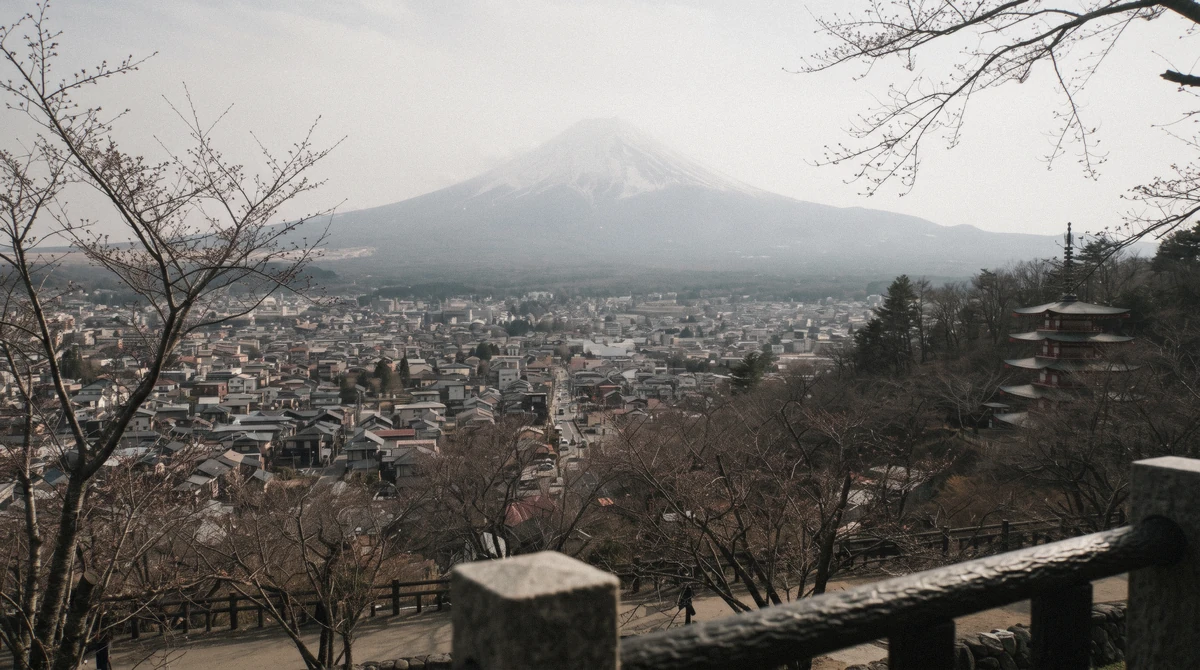
The park holds more than 650 Someiyoshino cherry trees, and the combination of pagoda, mountain and blossom in one frame is the single most photographed scene at the lakes. Blossom at this elevation, close to 1,000 metres, usually peaks around mid-April, noticeably later than central Tokyo. Treat that as a forecast rather than a fixed date; the bloom window shifts by roughly a week in either direction depending on the spring, so check a current forecast rather than locking dates months out.
Autumn colour and crowds
Outside blossom season, the park is quieter, and the trees turn through autumn as elsewhere in the region, though the pagoda itself is valued year-round for the mountain view alone, with or without foliage in frame. Weekends and the blossom weeks bring the heaviest crowds on the deck and the stairs; a weekday morning is the reliable way to get a clearer run at the viewpoint without competing for space at the rail.
The deck itself is not large, and the classic angle, pagoda in the foreground with the mountain framed behind it, only fits a limited number of people at once. On a clear weekend during blossom season, expect to wait a turn at the rail rather than have the spot to yourself; arriving with the early light, before the tour coaches reach the lakes, is the most reliable way around that, and it has the added benefit of being the same window when the mountain is most likely to be visible at all.
Combining It with the Rest of a Day at the Lakes
The stairs take under half an hour, which leaves most of a day trip for everything else around the lakes.
What pairs naturally
Because the climb itself is short, most itineraries treat this as one stop among several rather than a destination on its own. Oshino Hakkai's spring-fed ponds, Oishi Park on the north shore of Lake Kawaguchi, and the Mt. Fuji Panoramic Ropeway across the water all sit within a normal day's driving loop from Fujiyoshida, and several guided tours sequence this stop first, while the light is still good, then move on to the lakeshore sights through the middle of the day.
- Pair with Oshino Hakkai for a village-and-memorial morning
- Pair with Oishi Park and the ropeway for a lakeshore-and-viewpoint day
- Visit alone from Shimo-Yoshida if the pagoda is the one thing on your list for the day
Independent visitors versus a guided stop
Nothing about the pagoda requires a tour; the free admission, round-the-clock access and simple one-station approach from Kawaguchiko make it one of the easiest independent stops at the lakes. Where a guided day handles a genuine problem is sequencing: fitting the pagoda, a couple of lakeshore sights and the return to Tokyo into one day without waiting on the Blue Line's slower schedule or working out the walk from Shimo-Yoshida yourself. If your day is built around this one stop and a slow morning, going independently costs nothing extra.
If you want the pagoda alongside three or four other sights without the logistics, a guided loop does that work for you.
Chureito Pagoda: Questions Answered
How many steps are there at the Chureito Pagoda?
398 steps from the park entrance to the observation deck, with a sloped path running alongside part of the way before it turns back into stairs near the top.
Is the Chureito Pagoda free to visit?
Yes. Admission to Arakurayama Sengen Park is free, and the park stays open 24 hours with no seasonal closure.
What time does the Chureito Pagoda open?
There is no set opening time; the park is open around the clock, every day of the year, which is why an early morning visit is possible for the clearest light.
Which station is closest to the Chureito Pagoda?
Shimo-Yoshida on the Fujikyuko Line, about a 20-minute walk from the foot of the stairs. Full fares and route options are covered in getting to Kawaguchiko from Tokyo.
When is the best time of day to photograph the Chureito Pagoda?
The first hours after sunrise, before cloud typically builds over the mountain through the morning. The park's round-the-clock access makes an early visit straightforward.
What is the Chureito Pagoda for?
It is a war memorial, the Fujiyoshida cenotaph for residents who died in wars dating back to 1868, holding 1,055 names. It predates its current fame as a photo spot by decades.
Is there parking at the Chureito Pagoda?
Yes, 87 free spaces for regular cars, though a charge applies during the cherry blossom festival period.
The pagoda rewards a short, unhurried visit more than a rushed one: a quiet moment on the deck, a look at what the memorial actually holds, then the walk back down. Most of the day is still ahead of you either way, whether that means Oshino Hakkai, the ropeway, or simply the ride back to Tokyo. To build a full day around it, the Chureito and Arakurayama culture day and the five-viewpoint photography day both stop here, and getting around the lakes without a car covers the buses if you are doing it independently.