Kawaguchiko: Day Trip or Overnight?
Whether a kawaguchiko day trip or overnight stay makes more sense depends on one number most guides skip: how many hours you actually spend at the lakes once travel time is subtracted. Central Tokyo sits about two hours from Kawaguchiko by any route, which turns a single day into a shorter visit than the itinerary photos suggest. Fuji Five Lakes tours from Tokyo run the numbers for you on a set schedule, but it helps to see the maths laid out plainly before you decide.
Quick answer
A day trip works well for most visitors: guided tours run about 10 hours door to door from central Tokyo and leave roughly five to six hours on the ground, enough for three to six stops around Lake Kawaguchi. An overnight stay mainly buys you the early morning light on Mount Fuji, which a same-day arrival cannot reach.
Key takeaways
- Travel runs about two hours each way from central Tokyo whichever route you take, so a day trip's real budget is closer to six hours than twelve
- Mt. Fuji Six-Spot Highlights Day Trip and Mt. Fuji & Hakone tour both fit inside a single 10-hour day
- The mountain is most reliably clear in the first hours after sunrise, a window a day trip from Tokyo cannot start early enough to catch
- The Blue Line out to Lakes Shoji and Motosu runs only every one to two hours, which is the main reason the far lakes are a poor fit for a single day
- A second day of local transport is cheap, a ¥1,500 (about $9) day bus pass; accommodation, not transport, is the real cost of staying over
- If you are weighing a second day, getting around the Fuji Five Lakes without a car covers the bus network in full
Day Trips That Fit the Six-Hour Window
These itineraries are built around the same real constraint covered below: about two hours each way, so the stops on the ground are chosen to fit.
 from $49
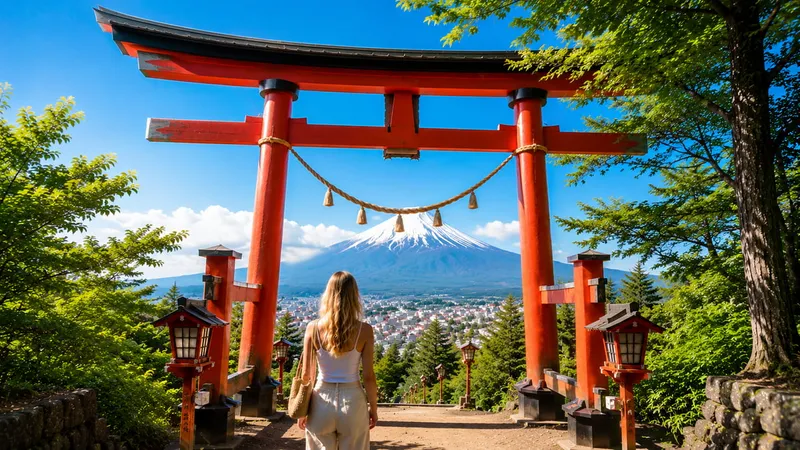
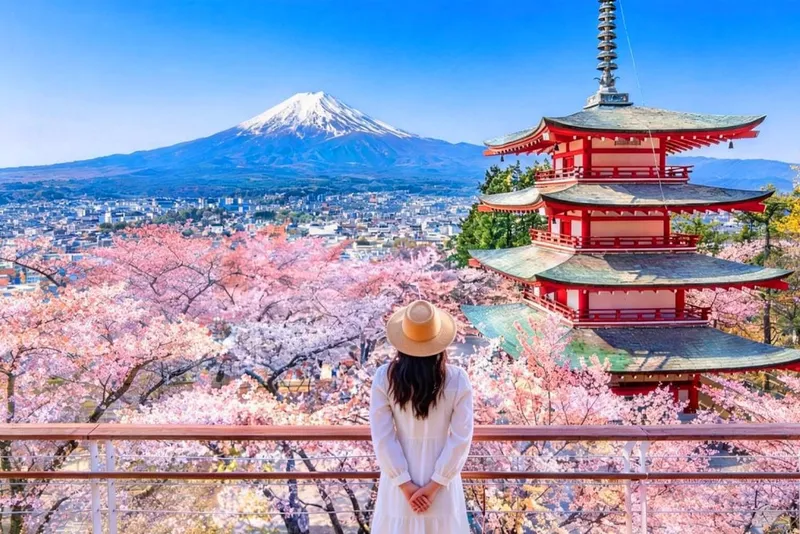
 Mt. Fuji Six-Spot Highlights Day Trip from Tokyo
A full-day loop hitting six classic Fuji Five Lakes viewpoints, from Arakurayama's Chureito Pagoda to the spring-fed ponds of Oshino Hakkai. Round-trip transport from Tokyo keeps the day…
- Chureito Pagoda viewpoint
- Lake Kawaguchi shoreline
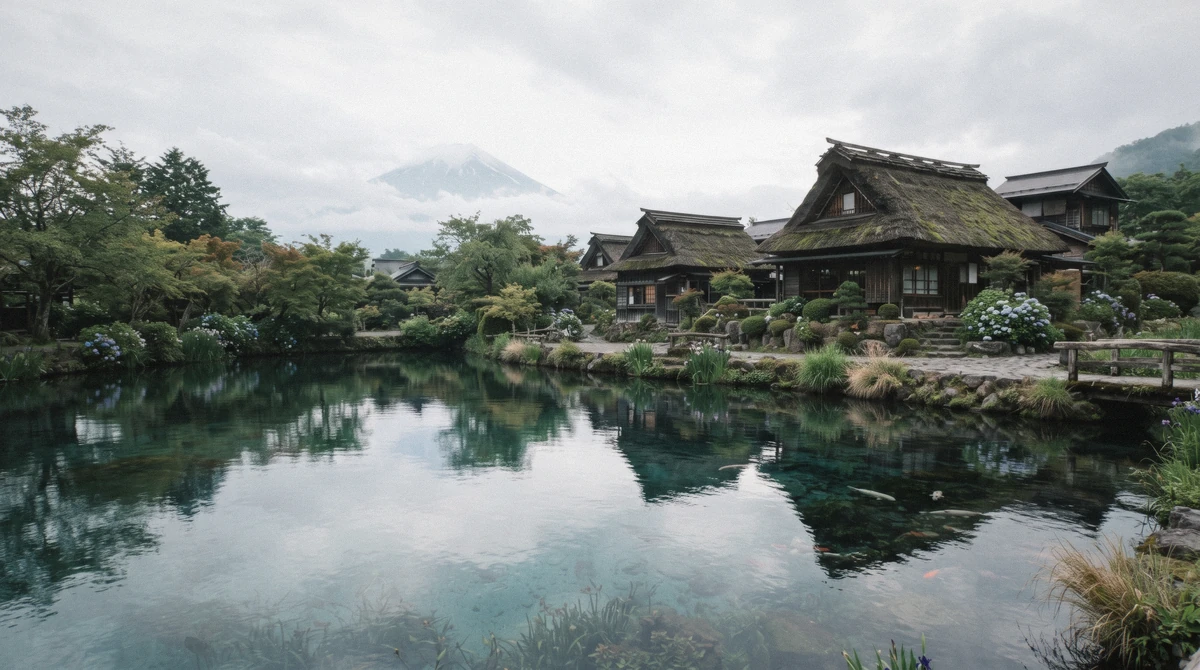
- Oshino Hakkai spring ponds
 from $54
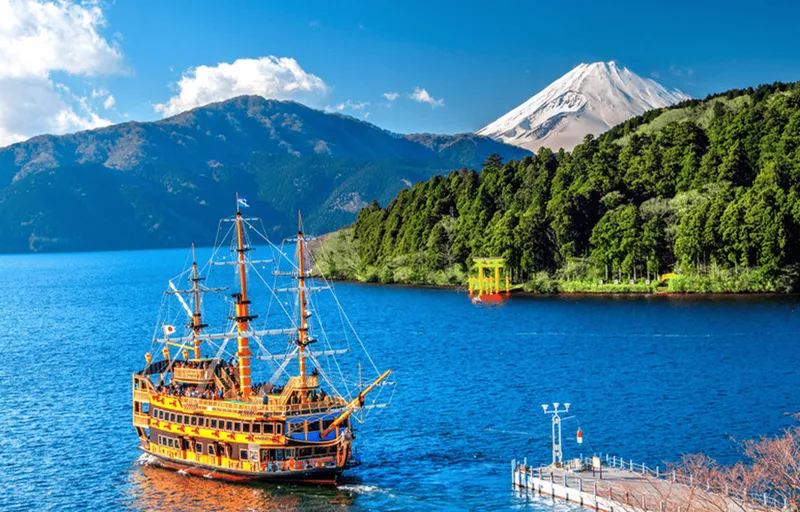
 Mt. Fuji & Hakone: Ropeway, Owakudani & Lake Ashi Cruise
Combines the Fuji Five Lakes area with Hakone's volcanic valley of Owakudani, reached by aerial ropeway, and a cruise across Lake Ashi. It is the most-booked way to…
- Hakone Ropeway to Owakudani
- Lake Ashi cruise
- Mount Fuji viewpoints
 from $49
 Fuji 5th Station, Onsen Hot Spring & Oshino Hakkai Tour
Climbs by road to Mount Fuji's 5th Station at 2,300 metres, then unwinds with a hot-spring onsen soak and a walk through Oshino Hakkai. It pairs high-altitude Fuji…
- Fuji 5th Station
- Onsen hot spring soak
- Oshino Hakkai village
The Honest Maths of a Day Trip
The headline number on a tour listing is the total time out of Tokyo, not the time actually spent at the lakes, and the gap between those two numbers is the whole decision.
Where the hours actually go
Guided day trips on this site run about 10 hours door to door, departing central Tokyo around 08:00 to 08:30 and returning in the early evening. Travel is about two hours each way from central Tokyo whichever route you take, whether that's the direct Fuji Excursion train, the Otsuki route, or a coach on the Chuo Expressway. Subtract four hours of travel from a 10-hour day and the honest figure is roughly five to six hours on the ground, which is what fits three to six stops around Lake Kawaguchi on a well-sequenced itinerary.
| Item | Time |
|---|---|
| Total day, Tokyo to Tokyo | About 10 hours |
| Travel out | About 2 hours |
| Travel back | About 2 hours |
| Actual time at the lakes | About 5 to 6 hours |
| Typical stops covered | 3 to 6, depending on the tour |
What that budget can and can't reach
Five to six hours is enough for a tight loop: Oishi Park, Oshino Hakkai, the pagoda at Arakurayama, maybe the ropeway, with a lunch stop worked in. It is not enough to also reach the far lakes. Shojiko and Motosuko sit on the Blue Line, which runs only every one to two hours, and a round trip out there on public transport alone would eat most of the ground-time budget by itself. A guided day trip solves this by driving directly rather than waiting on that schedule, but even then, the far lakes rarely make the cut on a single-day loop built around Kawaguchiko.
The stops that do fit share a common trait: they sit close together around Kawaguchiko itself, reachable in minutes rather than requiring a leg out to the quieter west side of the region. That's not a compromise so much as a sensible use of the time available; Kawaguchiko carries the frequent Red and Green line buses precisely because it's the busiest, most photographed part of the lakes, and a single day is enough to see why.
One Day Versus One Night
One day
- No accommodation cost or booking to arrange
- A fixed, guided schedule with return transport handled
- Covers the core Kawaguchiko sights: Oishi Park, Oshino Hakkai, the pagoda
- Arrives mid-morning at the earliest, missing the clearest early light
One night
- A second morning at the lakes, in the window when the mountain is most reliably clear
- Room to add a far lake, Shojiko or Motosuko, or a slower pace generally
- Local transport for the extra day is cheap, a ¥1,500 to ¥2,000 (about $9 to $13) bus pass
- Adds the cost and logistics of a place to stay, which this guide does not price for you
Verdict For a first visit built around the core sights, a day trip covers the ground efficiently and honestly. An overnight stay is worth the extra planning specifically for the early-morning light and for reaching the quieter, farther lakes, not because a single day is somehow insufficient for a first look. Neither choice is a mistake; they're built for different trips.
Which One Fits Your Trip
If You have one day free in Tokyo and want the core sights
Book a day trip; the five to six hours on the ground comfortably covers Oishi Park, Oshino Hakkai and the pagoda
If You want the best odds of seeing Mount Fuji clearly
Stay overnight and get out to the lakeshore in the first hour after sunrise, a window a same-day arrival cannot reach
If You want to see Shojiko or Motosuko, not just Kawaguchiko
Plan a second day; the Blue Line to the far lakes runs only every one to two hours, which does not fit a single-day loop well
If You're combining the lakes with Hakone in one trip
A day trip that pairs both regions in a single loop, like the Hakone combination tour, keeps the whole trip to one day
If Your travel dates fall in June or September
Budget for cloud either way; those months have the lowest sunshine and highest rainfall on record at the lakes, so neither a day nor a night guarantees a clear view
The Case for a Second Morning
The clearest argument for staying over isn't about seeing more stops. It's about the light.
The clear-air pattern
The mountain is most reliably clear in the first hours after sunrise, and cloud tends to build over the cone from mid-morning as the day warms. A guided day trip from Tokyo, even one departing at 08:00, physically cannot reach the lakeshore before that window closes; by the time the coach arrives, the morning's clearest hour has usually already passed. Staying the night is the only way to be standing at the water's edge when the air is at its calmest, and it costs nothing beyond the accommodation itself, since local transport for an extra day runs on the same cheap bus network.
This is a pattern in the record, not a promise for any single morning; some mornings the mountain simply doesn't show regardless of how early you're standing at the shore. What staying over changes is the number of mornings you get to try. A day trip gives you one shot at whatever the sky happens to be doing mid-morning; a night at the lakes gives you the earliest, statistically best window plus a second look the next day if the first one disappoints.
What the season adds to the odds
The season shifts the answer too. January records the most sunshine of any month at the lake, and September the most rain, so a night in September buys you a second roll of the dice against genuinely worse odds than a night in January would. There's no way to guarantee a clear view on any single morning, staying over or not, but the record supports treating winter and early spring as the more forgiving stretch of the year, and late summer into autumn as the harder one. The full month-by-month table lives on best time to visit Kawaguchiko.
That seasonal swing matters more for an overnight decision than it does for a day trip, because a day trip only ever gets one attempt regardless of the month, while an overnight stay's whole extra value is a second attempt at a better hour. In a wet, cloudy month, that second attempt is worth more, not less, since the odds on any single window are already working against you. In a clear month, a day trip's single mid-morning window is a reasonably safe bet on its own, and the case for staying over rests more on pace and the far lakes than on visibility.
What a Well-Run Single Day Actually Looks Like
A representative sequence, based on the typical shape of the day trips on this site.
-
08:00
Depart Tokyo
Meeting point is a set station, Tokyo Station or Shinjuku, not a hotel pickup on most listings. Coach heads out on the roughly two-hour run toward the lakes.
-
10:00
First stop
Arrival at the lakes, usually Oishi Park or a viewpoint first while the morning light still holds some of its clarity.
-
11:30
Midday sights
Oshino Hakkai or the pagoda at Arakurayama, depending on the itinerary's sequencing; this is where most of the ground time gets spent.
-
13:00
Lunch stop
Built into most full-day itineraries, often with a set menu or a free stop at a local spot.
-
14:30
Final stop
A last sight before the group reassembles, commonly the ropeway or a shorter photo stop depending on how the morning ran.
-
16:00
Depart the lakes
The return leg begins, another roughly two hours back toward central Tokyo, longer if Sunday afternoon traffic on the expressway is heavy.
-
18:00
Back in Tokyo
Drop-off at the original meeting point in the early evening, closing out the roughly 10-hour day.
What an Overnight Buys You, and What It Costs
Staying over is a genuine upgrade for some trips and an unnecessary complication for others; the honest version of both sides.
What you gain
A night at the lakes turns a single rushed loop into two calmer half-days: an evening to settle in without a schedule, a full early morning at the water's edge in the clearest light, and enough slack to add a far lake or simply linger somewhere a day trip would have to skip. It also removes the return-traffic pressure that shapes the back half of every single-day itinerary, since there's no coach to catch by a set hour.
- A genuine early-morning window at the lakeshore
- Room for a far lake, Shojiko or Motosuko, on the Blue Line
- No same-day return-traffic pressure
- A calmer pace generally, with two half-days instead of one full one
| What you want from the trip | One day works | A night works better |
|---|---|---|
| A clear view of the mountain | Only if the day happens to be clear on arrival | Yes, you get the first hours after sunrise |
| Lake Kawaguchi, Oishi Park, Oshino Hakkai | Yes, comfortably | Yes, at a slower pace |
| Chureito Pagoda and the 398 steps | Yes, if it is on the itinerary | Yes, and at quieter hours |
| Lakes Shoji and Motosu | No, the Blue Line runs only every one to two hours | Yes, with a whole morning for it |
| An onsen at the end of the day | Rushed, and it eats a stop | Yes, without watching the clock |
| Autumn illumination along the maple corridor | No, you are on the road back | Yes, it runs to 21:00 during the festival |
The trade-off in plain terms
Every hour spent researching and booking a place to stay is an hour not spent on the parts of a trip that are simpler to arrange, like a guided day trip with a fixed departure time and a set itinerary. That's not an argument against staying over, it's just the honest cost on the other side of the ledger from the extra morning. Travelers on a tight schedule through Japan, with only one open day near Tokyo, are usually better served by the day trip's simplicity; travelers building a slower, dedicated trip to the lakes get real value from the second morning.
What it costs
This site has no verified accommodation prices to offer, so plan on researching a place to stay separately rather than treating a night at the lakes as a fixed add-on cost. What is verifiable is the transport side: the local area bus pass runs ¥1,500 (about $9) for one day or ¥2,000 (about $13) for two, so the second day of getting around barely moves the budget. Last verified: August 2026.
The real cost of staying over is the accommodation itself, plus the time spent arranging it, not the local transport, which stays cheap either way.
Kawaguchiko Day Trip or Overnight: Questions Answered
Is one day enough for Kawaguchiko?
Yes for a first visit focused on the core sights. A guided day trip leaves roughly five to six hours on the ground, enough for three to six stops around the lake.
Should you stay overnight in Kawaguchiko?
Only if your priority is the early-morning light on Mount Fuji or reaching the far lakes, Shojiko and Motosuko. For a first look at the core sights, a day trip covers the ground efficiently.
How many hours do you actually get at the lakes on a day trip?
About five to six hours, once the roughly two hours of travel each way from central Tokyo are subtracted from a typical 10-hour day.
What can you not fit into a Kawaguchiko day trip?
The far lakes, Shojiko and Motosuko, are the main casualty. Their Blue Line bus runs only every one to two hours, which does not fit comfortably inside a single day's ground-time budget.
Does staying overnight improve your chance of seeing Mount Fuji?
It improves your access to the clearest window, the first hours after sunrise, which a same-day arrival from Tokyo cannot reach. It does not guarantee a clear view; that still depends on the season and the day.
Is it cheaper to stay overnight or do a day trip?
A day trip has no accommodation cost. An overnight stay adds a place to sleep, which this guide doesn't price, though the extra day of local bus transport is cheap, ¥1,500 to ¥2,000 (about $9 to $13).
What time do guided day trips leave Tokyo?
Most depart central Tokyo around 08:00 to 08:30 from a set station, Tokyo Station or Shinjuku, and return in the early evening.
Neither option is wrong. A day trip is the efficient, honest way to see the core sights once, and a night at the lakes is a deliberate upgrade for the early light or the quieter far lakes, not a correction for a day trip's shortcomings. Whichever you choose, the six-spot value loop is the efficient single day, the Fuji and Hakone combination is the long one, and getting there from Tokyo sets out what the journey costs on your own.